
From Cocktail Napkin to $1 Billion

The recent acquisition of Fastcase-vLex by Clio for US $1 billion is more than a business transaction. It marks the moment when decades of purposeful innovation, guided by Fastcase and championed early by Spencer Trask & Co., converged to align artificial intelligence with the public good and open the law to everyone.

A Spencer Trask Mission Rooted in Access

Fastcase began as an idea sketched on a cocktail napkin. Co-founders Ed Walters and Phil Rosenthal, and Spencer Trask & Co. Chairman, Kevin Kimberlin, saw lawyers drowning in documents and citizens priced out of justice. Their answer was a legal research engine built to put primary law at every lawyer’s fingertips and, ultimately, in every citizen’s hands. Spencer Trask recognized the potential from the start, providing the first and only institutional capital and steadfast encouragement to keep the mission of access front and center.

Building an AI Foundation

Long before generative AI dominated headlines, Fastcase treated artificial intelligence as a core strategy. Key milestones came rapidly:

  • 2017 – The team launched its AI Sandbox to experiment with large-scale text learning.
  • 2018 – Acquiring Docket Alarm added predictive analytics drawn from millions of court filings.
  • 2020 – Bringing Judicata into the fold introduced deep semantic mapping of case law, often described as a legal genome.
  • 2023 – Merging with vLex created the world’s most comprehensive legal library and produced Vincent AI, the first tool able to draft arguments across jurisdictions while citing authoritative sources.


Each step refined the technology’s alignment with legal ethics and transparency, ensuring AI served practitioners and the public rather than replacing judgment or compromising trust.

The Power of a Unified Platform

On June 30, 2025, vLex-Fastcase joined Clio, the leading cloud practice-management platform used by more than two hundred thousand law firms. The combination couples the richest legal data set on earth with the workflow hub where lawyers manage their practice every day. Lawyers will research, draft, file, invoice, and communicate within a single, AI-enhanced environment that keeps human expertise in the loop.

For large firms, advanced analytics become part of daily decision-making. For solo attorneys and community clinics, sophisticated tools once reserved for elite practices arrive at accessible prices. Most importantly, individuals and small businesses who have historically faced legal problems without counsel gain new pathways to timely, affordable answers.

Expanding the Reach of Justice

The law is the operating system of society. Yet research shows that more than three-quarters of Americans facing legal issues do not hire a lawyer, and the gap is wider in many other countries. By weaving Fastcase’s AI, vLex’s global content, and Clio’s intuitive workflows into one platform, the new Clio vows to close that justice gap. Every precedent, statute, and regulation is being translated into actionable guidance, delivered in plain language, and verified by citations so trust remains intact.

An Aspirational Future

What began with three innovators and Spencer Trask & Co. now stands poised to reshape a trillion-dollar industry and, more importantly, empower billions of people to understand and use the law. Spencer Trask’s early belief in Fastcase set this mission in motion. Today that vision scales worldwide through Clio. The journey proves that when capital, technology, and purpose align, access to justice is not a distant ideal but an achievable reality waiting at the next click.
“None of this would have been possible without the early support and steadfast counsel of Spencer Trask & Co., the first and only institutional investor in Fastcase.” (July 2, 2025)

Ed Walters, Fastcase Co-Founder & Chief Strategy Officer, vLex

As a First Investor in US Dollar Coin, Spencer Trask Scores at IPO

NYSE CIRCLE IPO Banner

Strong IPO validates early discovery of the USD Coin by Spencer Trask and SeedInvest

Spencer Trask & Co., the advanced-technology development firm known for discovering and backing transformative innovations, announced its 2019 sale of crowdfunding investment platform SeedInvest to Circle Internet Financial Ltd. has matured into a public stake following Circle’s successful initial public offering (IPO) on June 5.

“The Circle IPO is a landmark moment for the future of the global financial system,” said Kevin B. Kimberlin, Chairman of Spencer Trask & Co. “We merged SeedInvest into Circle at the start of USDC, recognizing its potential to become the dollar-backed internet currency the world needs.”

Market Validation of the USDC Thesis

Spencer Trask became a major Series A investor at SeedInvest’s inception. Seedinvest built the largest equity crowdfunding platform in the U.S. and connected 850,000 investors with more than 500 startups. Just before the launch of USDC, SeedInvest agreed to exchange shares with Circle.

“Yesterday’s IPO marks a major milestone for both Circle and everyone who helped build SeedInvest,” said Ryan Feit, founder and CEO of SeedInvest. “Spencer Trask backed us when we were just getting started and has been an invaluable partner throughout our journey.”

Circle’s traction and impact has been notable:

  • $400 million in private capital from BlackRock and Fidelity after USDC’s launch.
  • An oversubscribed IPO, reflecting strong institutional demand.
  • USDC has powered more than $25 trillion in on-chain transactions overall and $5.9 trillion in Q1 2025 alone—a 500 percent year-over-year increase.

“With Circle now listed on the NYSE, investors are boarding the train we identified at its inception,” Kimberlin added. “Our conviction in Circle echoes our belief in the inevitable digitization of money and the need for trusted, transparent, regulated infrastructure, just as we once saw Ciena’s capacity to power the optical networks that connect the world.”

Today, Circle continues its mission to deliver inclusive, secure financial services to the 1.4 billion unbanked adults worldwide (World Bank), a goal that aligns with Spencer Trask’s legacy of supporting technologies that lift civilization.

A Track Record of Discovery

Spencer Trask’s history of being the first to discover and support transformative technologies includes: Ciena Corporation, powering the Internet for 85% of the largest global telecommunications providers, Interos, the first AI-enabled supply chain risk monitoring platform, with the world’s largest B2B dataset, vLex/Fastcase, the world’s largest AI-enabled legal research platform, and DFMsim, a critical engine in Applied Materials’ AIx platform, simulating the full-stack design and manufacturing of integrated circuits—the most complex process in the modern economy.

“Our philosophy is to discover technologies that can redesign the future,” Kimberlin said. “Circle’s commitment to compliance and technical excellence squarely fits that tradition, and we congratulate Jeremy Allaire, Sean Neville, Ryan Feit, and the entire Circle team on this historic IPO. Their dedication is paving the way for a more open, inclusive, and efficient global economy.”

Food is Medicine

Spencer Trask Venture Good Measures Acquired by NationsBenefits, Bringing Personalized Nutrition to Millions

Pioneering Evidenced-Based Solutions in Healthcare and Nutrition

Spencer Trask & Co. discovers transformative ideas and helps make them practical, salable, and scalable to make a world of difference. Through two groundbreaking ventures—Health Dialog and Good Measures, LLC—the company has again demonstrated its ability to develop innovative solutions to systemic problems and create lasting impact.


Health Dialog: Pioneering the Evidence-Based Medicine Revolution

The journey toward evidence-based medicine began with Dr. Jack Wennberg’s research at Dartmouth, which revealed widespread variations in medical care that weren’t justified by patient outcomes. Spencer Trask & Co. responded by helping launch Health Dialog, designed to empower patients through evidence-based healthcare.

Under founder George Bennett’s leadership, Health Dialog transformed this research into up-to-date medical research made actionable through health coaches. As investor and director in both companies, Spencer Trask’s Kevin Kimberlin explains, “Health Dialog first commercialized what today is known as evidence-based medicine…creating a win-win-win for patients, providers, and insurers.” The results were remarkable: a $30 million investment yielded first a $170 million payout followed by a $770 million acquisition. 

This work significantly influenced the foundation of the Affordable Care Act (ACA). Peter Orszag, as “Health Care Czar” and head of the Office of Management and Budget, designed the ACA to leverage these insights, aiming to expand insurance access through savings generated by reducing unnecessary care variations. Since passage, the ACA has expanded healthcare insurance to 24 million Americans.

Good Measures, LLC: Evidence-Based Solutions for the Nutrition Crisis

The success of Health Dialog presented an opportunity to apply evidence-based principles to another critical health challenge – the misuse of food. With an estimated 43% of American adults being overweight and traditional interventions falling short, Good Measures emerged as a practical solution.The catalyst came through a powerful personal story. Stefany Shaheen, while managing four children under seven and Harvard Business School studies, watched her eight-year-old daughter struggle with Type 1 diabetes. “What used to be the simple step of pouring a bowl of cereal before school became an eight-step mathematical problem,” Shaheen recalls. “Measuring cereal, measuring milk, calculating carbohydrates, determining insulin dosage – and then often requiring additional insulin when blood sugars remain elevated.”

George Bennett recognized the parallel to Health Dialog’s mission. “We attacked the cause of the biggest healthcare problems in the U.S. — the nutritional imbalances that lead to chronic conditions that are a direct result of misunderstandings about and misuse of food,” he explains. Good Measures was the natural evolution of the Health Dialog model, combining mobile technology, clinical research on Food is Medicine with personal coaches for lasting behavior change.

Growing Impact

Good Measures’ patented nutrition technology and coaching platform is utilized by leading organizations such as: 

  • Google’s moonshot precision health initiative, Verily
  • Harvard Pilgrim Healthcare
  • Centene, the 4th largest health insurer in the U.S.
  • WellCare of Kentucky, the first health plan to launch GMI system wide
  • Tufts University, where Dr. Dariush Mozaffarian leads the Food is Medicine Institute and serves on the President’s Council                                                         


The NationsBenefits Merger: Scaling National Impact

The acquisition of Good Measures by NationsBenefits marks a pivotal moment in healthcare transformation. NationsBenefits, serving over 100 healthcare providers and distributing more than 25 million meals annually, provides the perfect platform to scale Good Measures’ evidence-based approach. Integration with Instacart facilitates the delivery of medically tailored groceries directly to users’ homes.

Looking ahead, artificial intelligence will enhance the platform’s capabilities, providing personalized, real-time guidance to millions. AI avatars will help individuals make informed food choices, monitor health metrics, and stay motivated on their wellness journeys.

What began with one mother’s frustration over managing her daughter’s diabetes has evolved into a solution that can transform millions of similar struggles across America. As Stefany Shaheen reflects, “Partnering with Nations to supply food on a tremendous scale and then enhance that with our personalized recommendations, personalized food prescriptions, and connecting nutrition to the clinical coaching that people really can benefit from, is very exciting.”

A Complete Solution for Global Health

With the combination of personalized technology, national reach, and clinically proven coaching methods, Good Measures and NationsBenefits are positioned to help American families transform their daily food challenges into achievable steps toward lasting health. Spencer Trask & Co. continues its legacy of identifying transformative ideas and making them accessible to improve global health outcomes.

Read our full press announcement

Vesselon Discovery Protects and Expands Drug Franchises

Drug maker is seeking strategic relationship to deliver unprecedented levels of efficacy by making tissues more receptive to drugs.

GREENWICH, Connecticut, May 22, 2023 — In a major development, Vesselon has discovered how to protect a superior method of delivering drugs shown to be effective in more than 1,700 independent preclinical and clinician-sponsored human trials. Despite compelling evidence that the method improves the Therapeutic Index of numerous drugs in many indications, its promise has been ignored by the pharmaceutical industry because it has not been patentable, until now.

Based on this discovery, the drug maker has filed patents on its TriForm™ lipid platform. Because it requires no modification of the branded drug, or its manufacturing, packaging, or distribution processes, the platform can be deployed quickly. This could have significant implications for the product life cycle management of many drugs, including biologics.

“Executives with brands at risk due to patent expiration or price competition can use this platform to protect and grow their franchises,” said Joe Truitt, a Vesselon board advisor and shareholder who has run and sold four biopharma ventures.

The on-site, in-vial mixing process instantly combines a therapeutic drug with the FDA-approved Vesselon lipid microsphere shown to have the same safety level as saline. After mixing a standard dose, each vial contains approximately 10 billion lipid microspheres encapsulating the active drug, 50 trillion liposomes loaded with the active drug, as well as the freely circulating drug. Any pharmaceutical agent combined with the TriForm platform is a new chemical entity that is patentable as well.

“This IP can materially increase the value of marketed drugs as well as those in development,” said Vesselon CEO Clay Larsen. “For instance, our data suggests that the platform enhances the value of anti-PD1 products. This evidence adds to that reported in hundreds of independent, validating studies, including human trials demonstrating marked improvements in difficult-to-treat malignancies such as pancreatic cancer. We believe our capability should be valuable for any acquiror.”

The lipid-drug combination is prepared on-site and administered intravenously, as the drug normally would be, so the process fits seamlessly into standard clinical practice workflows. FDA-cleared levels of ultrasound delivered from standard diagnostic ultrasound equipment, when directed at the diseased tissue or tumor, triggers biophysical interactions with the lipid drug combination. This activates up to nine synchronous and synergistic Modes of Action in the cellular and tumor microenvironment that work in concert with the molecular Mechanism of Action of the therapeutic drug. These Modes of Action (all reported in peer review publications) make the tissue or tumor far more receptive to the active drug, improving its pharmacokinetic and pharmacodynamic profile, and potentially improving the Therapeutic Index.

“Traditional drug delivery has focused on the transmit part of the equation. Vesselon transforms how drugs are received and acted upon by tissues and cells,” added Larsen.

Vesselon board chairman and co-founder Kevin Kimberlin remarked: “With this IP, and our smooth regulatory path, we have cracked the code to improving drug efficacy. Now is the perfect time to build a strategic relationship to scale and commercialize this technology.” Kimberlin, who serves as chairman of Spencer Trask & Co., co-founded genomics pioneer Myriad Genetics and the regenerative medicine company Osiris Therapeutics, which developed cell therapies that generated $1.5 billion in revenues. He also developed the first FDA-approved cell-based immunotherapy with Dr. Jonas Salk.

In addition to existing franchises, current and future pipeline drugs will also benefit from the Vesselon platform. For example, proprietary drugs can be made with monoclonal antibodies, proteins, cytokines, nucleic acids, peptides, small molecules, and antibody drugs, as well as larger drug vectors like oncolytic viruses and lipid nanoparticles.

About Vesselon, INC.
Vesselon Inc. develops patentable drugs using an FDA-approved, biophysically activatable lipid microsphere and self-assembling liposome platform. It produces unprecedented levels of efficacy by transforming how drugs are received and acted upon by tissues and cells. The platform can extend patents and create an endless stream of proprietary drugs.

Spencer Trask & Co. Venture Fastcase Merges with Legal Intelligence Platform vLex

Photo credit: The New York Times

Deal for Cash and Stock Organized by Oakley Capital.

Advanced technology development firm Spencer Trask & Co. today announced the merger of Fastcase with vLex in a transaction funded by private equity firms Bain Capital and Oakley Capital.  The new venture provides a combined 3.8 million users in over 100 countries with smart access to the most extensive collection of legal and regulatory information in the world.

Spencer Trask & Co. was the first institutional investor in Fastcase and its largest shareholder. “We’re really proud to see Fastcase take its mission to the global stage.” Spencer Trask & Co. Chairman, Kevin Kimberlin

The flagship Fastcase service extracts value from the entire corpus of U.S. law – from all 50 states, all Federal and appellate courts, the U.S. Code, the Federal Register from inception, and the Congressional Record volumes in their entirety. The firm provides highly accurate methods for researching these millions of pages of legal documents with predictive analytics and AI-enhanced smart tools. This provides analysis unavailable elsewhere such as case-prediction indicators on judges, venues, adversaries, and attorneys, and measures of gender diversity at law firms.

Revenues in the global legal services industry reached $900 billion in 2022 and yet the legal field has been slow to adopt technologies that are standard fare for financial, retail, and information service providers.

“Artificial intelligence and data analytics technology, used routinely elsewhere, will be demanded by discerning legal clients in the future,” said Ed Walters, Fastcase co-founder and CEO. “So Fastcase combined these must-have analytics with the largest law library in the world.”

For its technology backbone, Fastcase acquired legal search firm Judicata, funded by Khosla Ventures and Peter Thiel, and run by Blake Masters, now COO of Thiel Ventures. The Judicata senior team remained with Fastcase.

“From the beginning, Spencer Trask supported our mission to democratize the law in the United States.  vLex is the perfect partner to scale this mission globally,” concluded Walters.

Lessons from the Collapse of SVB: Why Proper Risk Management and Transparency are Essential in the Financial Industry

Photo credit: The New York Times

By Bill Clifford — CEO, Spencer Trask & Co.


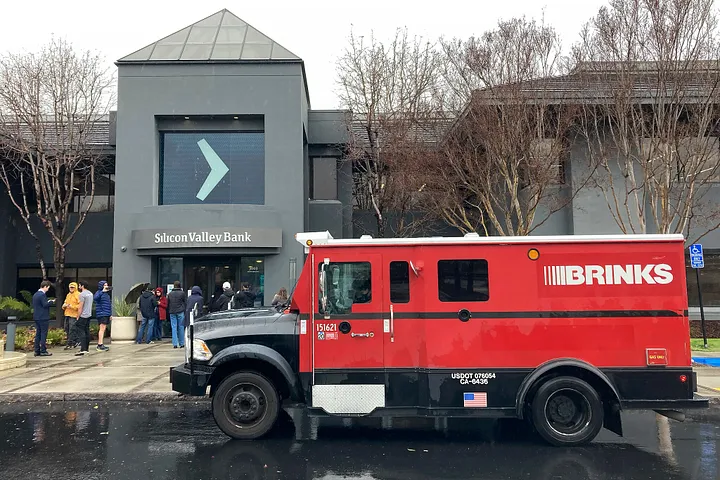
The collapse of Silicon Valley Bank (SVB) has sent shockwaves throughout the financial world. It is a sobering reminder that even the most well-respected companies can suffer catastrophic losses if they become complacent or fail to adapt to changing circumstances. There are several key lessons that we can learn from this unfortunate event.

.   .   .

First, it is important to understand that no investment is completely risk-free. While SVB was widely regarded as a stable and trustworthy firm, the reality is that it was exposed to significant market risks. When those risks materialized, the firm was unable to absorb the losses and ultimately collapsed. This serves as a reminder that investors should always carefully consider the risks associated with any investment and diversify their portfolios accordingly.

Next, the collapse of SVB highlights the importance of proper risk management practices. While it is impossible to completely eliminate all risks, firms must take steps to identify and mitigate potential risks. This includes conducting thorough due diligence on investments, monitoring market trends and conditions, and maintaining sufficient reserves to cover potential losses. When firms become over-reliant on a single investment or fail to properly manage risks, they can quickly find themselves in financial trouble.

Thirdly, the collapse of SVB underscores the importance of transparency and accountability in the financial industry. Investors have a right to know how their money is being invested and what risks they are exposed to. Firms must be transparent about their investment strategies and be held accountable for any losses that occur. This includes proper disclosure of all relevant information, as well as taking responsibility for any mistakes or misjudgments that may have led to losses.

Lastly, the SVB collapse highlights the need for greater regulation in the financial industry. While some may argue that excessive regulation can stifle innovation and growth, the reality is that without proper oversight, firms may engage in risky or unethical behavior that can harm investors and destabilize the financial system. Regulators must work to ensure that firms are adhering to proper risk management practices, maintaining adequate reserves, and being transparent about their investment strategies and activities.

.   .   .

This moment serves as a warning that the financial industry must continue to evolve and adapt to changing circumstances. As technology and markets continue to evolve at a rapid pace, firms must be willing to embrace new strategies and technologies in order to stay competitive and mitigate risks. This includes investing in new technologies such as blockchain and artificial intelligence, as well as adopting new business models that can better navigate the challenges of an increasingly complex and interconnected global economy.

Fraudster Sam Bankman-Fried is a Pathetic Character and a Product of our Time

Credit: Ben Garrison, ©GRRRRGraphics.com via Reddit
WeWorking the System

By Bill Clifford — CEO, Spencer Trask & Co.

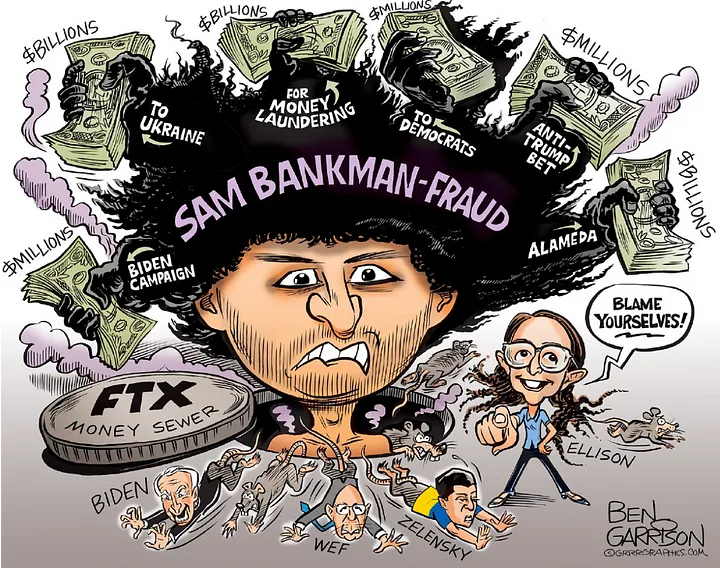
Several weeks have passed since a spoiled millennial from the Silicon Valley has been exposed as one of the most prolific con men of the 21st Century. Sam Bankman-Fried (aka SBF) has allegedly perpetrated one of the costliest frauds in the history of the financial markets and duped his investors and clients out of tens of billions of dollars. The ex-CEO was scheduled to testify today as a “witness” before the U.S. House of Representatives Committee on Financial Services but was arrested late Monday afternoon in the Bahamas at the request of the U.S. government. The Committee has begun its investigation of the events that led up to the implosion of the crypto exchange FTX and its filing for bankruptcy last month.

.   .   .

To recap: A man in his mid 20’s chased untold wealth when starting a cryptocurrency hedge fund called Alameda Research (Alameda) in 2017. He began making money hand over fist — so much so that he became a highly influential figure in the crypto world. He then founded a crypto trading exchange called FTX in 2019, backed by the biggest names in Venture Capital. His close association with Alameda and the discovery of transfers of large sums of money to Alameda, which were allegedly lost in high risk trades, caused FTX to be caught short when investors sought redemption earlier this year. Now he’s peddling canned mea culpas via press interviews while confessing to making some rookie mistakes and pleading ignorance and seeking forgiveness. Welcome to the SBF apology tour.

.   .   .

Ultimately, a failed acquisition to purchase FTX’s non-U.S. businesses by early investor and eventual competitor Binance would prove SBF’s final undoing. Binance backed out of the “Hail Mary’’ deal on Nov. 9, 2022 after a brief period of corporate due diligence and examination of FTX financials. This led to FTX’s bankruptcy declaration on Nov. 11, 2022, the resignation of SBF as CEO, and the appointment of a caretaker CEO designed to recover as much cash as possible for investors and clients. While SBF initially fled the U.S. for the Bahamas in Sep. 2021, reportedly citing a more favorable regulatory environment, one could posit his move was also a tactic to avoid forthcoming prosecution. His net worth would plummet from $72B to $100,000 as FTX valuation fell to zero. Gone are the goals of Benevolent Altruism he so proudly espoused when making money so easy in the early days of FTX.

There is no denying that SBF is intelligent. Many have commented on his ability to conduct a potential investor call while at the same time playing the League of Legends video game. I’m sure his MIT degree in Physics prepared him appropriately for the many vectors associated with market ups, downs and tangents. However, in my view, the scruffy hair, wrinkled tee shirts and ever-present cargo shorts was a facade to project that SBF was simply “too cool for school” to be bothered to care about his personal appearance, which likely distracted from his incompetence in business.

After starting cryptocurrency trading firm Alameda with great success, SBF was making obscene amounts of money in Crypto trading. So much so that he became a notable and significant donor in the 2020 Presidential elections, contributing $5.2M to the campaign of Joe Biden alone. According to SBF, he gave liberally to both parties, so much so that at nearly $40M he was the second largest contributor to Democrat politicians for the 2022 midterm elections — second only to George Soros. He contends that his contributions to Republican causes are not as well publicized because they would not be well received by his Democrat friends or his parents. Also noteworthy is the fact that his mother is the president of a California-based left wing PAC called Mind the Gap that raised $140M for Democrat causes.

That $40M in political donations to Democrats may be the smartest investment SBF ever made since it may be the one that proves the age old theorem — “never bite the hand that feeds you!” How could Maxine Waters come down hard on SBF? There are hundreds of photos in circulation with her arms wrapped around his waist, smiling from ear to ear after SBF tickled her campaign coffers with a nice contribution during the last election cycle. In all fairness, shouldn’t she and Joe Biden and all the other recipients of these ill-gotten campaign contributions return these funds to the new caretakers of the FTX asset holder so that they can be returned to the investors and clients who were defrauded of their investments as a result of SBF’s actions? It seems the ethical thing to do.

.   .   .

The FTX collapse is what happens when entitled children are allowed too much power with little to no oversight by the supposed adults in the room.

As this unseemly “drama” continues to play out in the weeks and months ahead, I expect a plethora of Federal indictments coming down the pike. Only time will tell whether financial regulators will act justly to ensure that people never again lose their life savings at the hands of these hype men and schemers.

Investor Insights: Part Two

WeWorking the System

By Bill Clifford — CEO, Spencer Trask & Co.

This is the second of a series focused on unicorns whose tusks were shorn once investors and journalists exposed egregious operational malfeasances of messianic leaders who were peddling what turned out to be nothing more than a vision wrapped up in emotion and ‘hot air.’ And in the case of WeWork in particular, a leader who was supported by a cast of employees and customers who functioned more like a fraternity or a cult than anything approaching a business relationship.

.   .   .

Adam Neumann and Miguel McKelvey started WeWork in 2010 with a breakthrough business model that promised to shake up the market for commercial office space–a multi-billion-dollar industry. Their model was easy to grasp and an attractive product for many early-stage technology companies that were struggling to finance their rapid growth while meeting payroll costs, technology costs, and office rental costs in the sky-high real estate markets of Silicon Valley, New York and Boston, etc. WeWork’s solution was perfect and made short-term leasing a scalable amount of office space accessible to the masses — from independent freelancers to the early teams at GOOP.

WeWork assumed the risk of the long-term lease commitments with startups only committing to short-term rentals for near-term space needs and scaling up or down on that space based on operational growth or decline. Each WeWork location became a “mini-Kibbutz” to harken back to Neumann’s childhood upbringing in Israel. Neumann encouraged Friday afternoon communal beer bashes and lots of fraternization across all WeWork locations to create the sense of one big, happy WeWork family.

JP Morgan Chase, T.Rowe Price, Goldman Sachs Group and others investors had, by 2014, pumped the valuation of WeWork up to $4.6B. Neumann was enjoying trips on the company jet to surfing vacations in exotic locations around the globe while buying buildings and leasing the space back to WeWork at a premium. Among other self-dealings, he also acquired the rights to the ‘We’ trademark only to sell it back to the company for $6M.

While all this buzz about WeWork was happening in the marketplace, the Saudi government was embarking on a program to invest and diversify substantial amounts of its sovereign funds through independent third-party channels into businesses worldwide. The channel that they had chosen to invest these funds in was Softbank, a leading Japanese Venture Capital firm with a long track record of success and led by the renowned Masayoshi Son. As a result of this association, SoftBank created its Vision Fund focused on a ‘300 Year Vision’ of the Future.

Approaching 2017, the mercurial Neumann delivered a passionate pitch to Son during a now infamous 20-minute cab ride; Son agreed that Neumann was on to something big, and his Vision Fund of Softbank invested $4.4B into WeWork–which upped its valuation to $20B.

The money just kept rolling in for WeWork and there seemed to be no end in sight. The company ended FY ’17 having gone through a massive acquisition period and international expansion binge. They entered into Southeast Asia and Brazil, and partnered with Airbnb to encourage business travelers to use WeWork locations while away from their home offices. It also expanded into the workout/gym business with its first WeGym — and there was seemingly no stopping Neumann in his quest to dominate all facets of the human work/life experience. Any business with a complimentary product or service, or a similar model or business focus, was ripe for acquisition.

The acquisitions kept coming: Fieldlens, Spacemob, Unomy, Naked Hub, Embassy, Meetup, LTB (UK), Euclid, Managed by Q, Islands, Prolific Interactive, Teem, Spacious, Designation, Waltz, SpaceIQ, just to name a few. The list seemed endless… but the cracks in the dam began to leak as the company filed for its Initial Public offering as it approached 2019.

Prior to its IPO filing, Softbank had invested another $2B into WeWork (now WeCompany) after launching sister enterprises named WeLive, WeGym, etc. The initial $47B valuation was immediately called into question by analysts and journalists, and the company retracted its S1 filing stating that it looked forward to a “successful initial offering later in 2019 at an offering price in the $10–12B range.”

Unlike Theranos’ CEO Elizabeth Holmes, who at one time was one of the richest women in America with a net worth valued at $4.5B, only to find herself left with essentially zero net worth and facing a prison sentence, Neumann wisely cashed out early and often from the emerging debacle of WeWork.

When the flaws in the WeWork business model became apparent to all the investors and the prospective investing public alike, Softbank took a $9B plus write off on its investment in WeWork and became the primary owner of the company. Neumann agreed to step down as the day-to-day leader of WeWork and turned the reins over to co-CEO’s Artie Minson and Sebastian Gunningham. Rebekah Neumann also stepped down from her executive position at WeWork.

Don’t feel too sorry for the Neumanns — Softbank bought $1B of Adam Neumann’s stock upon his leaving and gave him a $185M consulting contract along with $500K to cover his JP Morgan loan. The company continues to function, albeit in a limited capacity, and has terminated thousands of employees over the past two years.

And yet, for Neumann, life goes on. Following the cash windfall from his WeWork exit, he pivoted to property investment with stakes in a reported 4000 apartment units. Additionally, according to an interview with The Financial Times, he has invested in 49 companies to date through his family fund, which employs more than 50 people.

Why are people and companies continuing to do business with this man?

Investor Insights: Part One

Theranos — From Industry Darling to Dead Unicorn

By Bill Clifford — CEO, Spencer Trask & Co.

This is the first of a series focused on unicorns whose tusks were shorn once investors and journalists exposed egregious operational malfeasances of messianic leaders who were peddling what turned out to be nothing more than a vision wrapped up in emotion and ‘hot air.’

.   .   .

When faced with the opportunity of investing in the next transformative business model, it seems that all rationality, logic and reason often goes out the window, and blind passion and irrationality are all that is left in the minds of investors and prospective buyers. Such has been the case with WeWork, Theranos, and Uber, all of which became major news stories and whose cautionary tales were dramatized on various streaming platforms. Each of these companies had novel approaches for penetrating a multibillion-dollar marketplace that was ripe for the taking, and all they required was a few million dollars from investors to launch their new enterprises.

While all three companies operated in completely different markets with completely different business models, there are striking similarities between each from which lessons can and should be learned by the investor community. All of these companies were founded and led by individuals who very much fit the messianic model.

Theranos was led by Elizabeth Holmes, who fashioned herself as the second coming of Steve Jobs. Jobs had his Lisa, Holmes had her Edison machine — only Jobs’ Lisa actually worked. Investors love a good Cinderella story and they certainly had one with Holmes. Jobs dropped out of college — Holmes dropped out of Stanford. You can’t convince me that a smart, charismatic woman peddling a transformative business model that was poised to shake up the multi-billion-dollar blood testing industry wasn’t going to get an audience with Silicon Valley’s most elite investors whenever she wanted. Investors such as Larry Ellison and Tim Draper both became early investors in Theranos.

When Theranos needed credibility Holmes went out and recruited high-profile public figures to join the company’s Board of Directors, including former Secretaries of State Henry Kissinger and George Shultz. (The latter of which would come back to back to bite the company as Shultz’s grandson became a whistleblower.) But the company plugged away, winning a major contract with Walgreens for in-store deployment of its Edison on-site blood testing device. At one point Theranos was valued at $9 Billion, making Elizabeth Holmes one of the richest women in America. The company maintained a veil of secrecy around everything related to its R&D, requiring tight NDAs from employees and disclosing little or nothing to anyone trying to dig deeper into the mysteries of the Edison machines inner workings. This should should have been a huge red flag to all involved.

The cracks in the foundation were beginning to get wider and deeper as investigative journalists probed into the science behind the Edison machine and its various degrees of testing and certification — only to find it lacking in both. As the FDA began to crack down on Theranos and impose constraints on Elizabeth Holmes’ ability to conduct business in the blood testing industry, she was forced to resign as CEO and the business was dissolved in 2016. Her net worth went from over $4.5 billion to essentially zero, and she has subsequently been convicted of four counts of fraud and is awaiting sentencing.

Her partner in crime at Theranos, Ramesh Balwani, has recently been convicted on all 12 counts of fraud and is awaiting sentencing. It is expected that both Holmes and Balwami will serve jail time. Are there any lessons to be learned by the investing community from the Theranos story, and will they take them to heart? You bet.

.   .   .

The Theranos story is a case study for letting the fundamentals of investing get out of hand too long before the proper due diligence is completed. And for the follow-on investors: Did they just assume that early investors did the due diligence for them? It is clear to me that the company created an atmosphere of privacy and secrecy for a very specific purpose; it didn’t want anyone to know that there wasn’t anything in the Edison machine but fairy dust. The addition of the big-name government and military officials to the Board was done purposefully — they brought status and credibility, and possibly contacts with prospective sales, but they didn’t know anything about blood virology so they couldn’t ask any questions about the science of the company and, in lieu of that rigorous due diligence, took what Elizabeth Holmes fed them as gospel. It was all a con — from the start. Investors lost a lot of money on Theranos — some of it venture money, some of it family office money — all of it gone with no recovery and no residual. Will those investors learn anything from this debacle — it’s hard to say. Despite losing over $100M, the venture players in this saga are not likely to stop playing unicorn-maker any time soon. Will they check and double check the technology before dumping money into a company? They say they will, but if the competition is knocking on the door with a $100M check at the same or better terms and the deadline is fast approaching, oftentimes due diligence gets short shrift in favor of a few discount points and Board seats.

Do I think that Theranos will be the last fraud debacle that we will see in the $5B and up range? No. There are probably two or three others percolating right now that we haven’t heard of, whose bubbles haven’t yet burst, and are just waiting to set the market ablaze with stories of how close they were to upsetting a multi-billion-dollar market with a new, breakthrough business model or technology. Buyer beware.

The Genome Makes Us Human

Output from DNA Sequencer (credit: National Human Genome Research Institute)

By John Essick

April 25th was National DNA Day, which celebrates completion of the Human Genome Project in 2003. Spearheaded in part by the National Human Genome Research Institute, the global mission of this education-focused initiative is to bring together students, teachers, and the public to learn more about genomics.

When completed in 2003, the Human Genome Project had produced a nearly complete human genome sequence, accounting for an estimated 92% of the human genome. Since then, innovative technologies have led to significant advances to fill in the gap of information contained in the remaining 8%. This resulted in the recent announcement that the Telomere-to-Telomere consortium had “published a collection of papers reporting the first truly complete sequence of the human genome.”

With a fuller understanding of the entire genome, researchers can round out their studies of genetic variation to allow diagnostic and pharma companies to introduce ever better personalized healthcare products.

The first company dedicated to healthcare products derived from data found in the human genome was Myriad Genetics.[1] It was founded in 1991 by the two men most responsible for gene mapping and DNA sequencing (the technical advances that enabled the Human Genome Project), population geneticist Mark Skolnick and Dr. Walter Gilbert, along with Spencer Trask & Co. chairman Kevin Kimberlin.

The effort actually began in 1974, when Skolnick began to study genetic linkages in Mormon families searching for inherited disease traits.[2] To locate individual genes on a given chromosome, he and colleagues, David Botstein, Ron Davis and Ray White, developed the gene mapping method they called Restriction Fragment Length Polymorphisms.This breakthrough ability to locate any gene inspired Harvard University Professor, Gilbert, on May 27, 1985, to conceive of sequencing all 3 billion bits of DNA. Having earned the Nobel Prize for co-developing the first widely used method of sequencing DNA, Gilbert became the most ardent and visible advocate of what came to be known as the Human Genome Project.[3]

Myriad Genetics first delivered on its promise when it led a consortium that discovered the breast cancer mutations, BRCA1 and BRCA2, and then launched the first genetic testing lab.[4] Today the firm provides genomic insights to patients and their health care providers around the world. Services include assessments of: breast and ovarian cancer predisposition risk, prostate cancer disease progression, and whether DNA-repair drugs will help a woman based on her individual ovarian cancer. These and many other personalized genomic insights have saved many lives.

In three decades since the launch of the Human Genome Project, scientists have unlocked secrets about genes and how gaps and breakdowns in their communication and operation can lead to disease and death. As a result of this understanding, the complete reference of the human genome has revolutionized the treatment of common diseases and rare genetic disorders and positively impacted the lives of millions. Further advances in genomics will improve the welfare of future generations to come.

For additional resources and to learn more about National DNA Day, please visit https://www.genome.gov.

John Essick is a freelance writer and author who enjoys working with companies that are shaping our world through innovation. He specializes in collaborating with creative teams to turn ideas into content at every stage of a customer’s relationship.