Output from DNA Sequencer (credit: National Human Genome Research Institute)
By John Essick
April 25th was National DNA Day, which celebrates completion of the Human Genome Project in 2003. Spearheaded in part by the National Human Genome Research Institute, the global mission of this education-focused initiative is to bring together students, teachers, and the public to learn more about genomics.
When completed in 2003, the Human Genome Project had produced a nearly complete human genome sequence, accounting for an estimated 92% of the human genome. Since then, innovative technologies have led to significant advances to fill in the gap of information contained in the remaining 8%. This resulted in the recent announcement that the Telomere-to-Telomere consortium had “published a collection of papers reporting the first truly complete sequence of the human genome.”
With a fuller understanding of the entire genome, researchers can round out their studies of genetic variation to allow diagnostic and pharma companies to introduce ever better personalized healthcare products.
The first company dedicated to healthcare products derived from data found in the human genome was Myriad Genetics.[1] It was founded in 1991 by the two men most responsible for gene mapping and DNA sequencing (the technical advances that enabled the Human Genome Project), population geneticist Mark Skolnick and Dr. Walter Gilbert, along with Spencer Trask & Co. chairman Kevin Kimberlin.
The effort actually began in 1974, when Skolnick began to study genetic linkages in Mormon families searching for inherited disease traits.[2] To locate individual genes on a given chromosome, he and colleagues, David Botstein, Ron Davis and Ray White, developed the gene mapping method they called Restriction Fragment Length Polymorphisms.This breakthrough ability to locate any gene inspired Harvard University Professor, Gilbert, on May 27, 1985, to conceive of sequencing all 3 billion bits of DNA. Having earned the Nobel Prize for co-developing the first widely used method of sequencing DNA, Gilbert became the most ardent and visible advocate of what came to be known as the Human Genome Project.[3]
Myriad Genetics first delivered on its promise when it led a consortium that discovered the breast cancer mutations, BRCA1 and BRCA2, and then launched the first genetic testing lab.[4] Today the firm provides genomic insights to patients and their health care providers around the world. Services include assessments of: breast and ovarian cancer predisposition risk, prostate cancer disease progression, and whether DNA-repair drugs will help a woman based on her individual ovarian cancer. These and many other personalized genomic insights have saved many lives.
In three decades since the launch of the Human Genome Project, scientists have unlocked secrets about genes and how gaps and breakdowns in their communication and operation can lead to disease and death. As a result of this understanding, the complete reference of the human genome has revolutionized the treatment of common diseases and rare genetic disorders and positively impacted the lives of millions. Further advances in genomics will improve the welfare of future generations to come.
For additional resources and to learn more about National DNA Day, please visit https://www.genome.gov.
John Essick is a freelance writer and author who enjoys working with companies that are shaping our world through innovation. He specializes in collaborating with creative teams to turn ideas into content at every stage of a customer’s relationship.
https://spencertraskco.com/wp-content/uploads/2023/06/Output-from-DNA-Sequencer.webp501720Jamie Dunnehttps://spencertraskco.com/wp-content/uploads/2025/11/SpencerTrask.pngJamie Dunne2023-06-08 11:58:482023-06-08 11:58:48The Genome Makes Us Human
Welcome to Spencer Trask Perspectives, a monthly interview series with our CEO Bill Clifford and writer John Essick. Mr. Clifford has generously agreed to share his unique insights and expert opinions on topics such as business development, deal flow, C-suite management, startup culture, entrepreneurialism, and more.
We welcome your feedback, and encourage you to submit questions to [email protected] for Mr. Clifford to answer in future articles.
It seems that finding a clear and concise definition of business development is a little like that old parable about the blind men and the elephant, with the meaning of the term depending upon the perspective of the person being asked. It can imply something completely different to a V.P. of Marketing than it does to a V.P. of Sales, and still something entirely different to a V.P. of Product Management. Yet business development is a vital component of a company’s growth and long-term success, which makes it something everyone should agree on and buy into.
In this installment of Spencer Trask Perspectives, I discuss the concept of business development with Spencer Trask CEO Bill Clifford to determine how an organization can create a business development plan that everyone in the business can understand, and in turn, relate to their own department’s goals and KPIs, as well as the organization’s success at large.
John Essick: As I mentioned in my introduction, the term business development seems to be quite misunderstood. Are there certain criteria you believe every business development plan should meet?
Bill Clifford: Since this is your first question, it is an appropriate place for me to clear up any confusion. The reason that the term “business development” is so often misunderstood stems from it being an overused, catch-all term, which happens to be one of my personal pet peeves. Companies apply it to cover an enterprise’s operation from strategy to finance to sales to service, all while being imprecise about what it exactly means to any of them. Actual business development transcends all organizations and job titles and must be an integral part of everything that everyone should focus on every minute of every working day. From the CEO to the entry-level clerk, each interaction with every customer or supplier should advance the development of the organization’s business.
In my view, everyone in the company has the implied responsibility to help further or create new business in everything that they do, no matter how small a role they may play. It is silly to me that one person can be designated the Director of Business Development when the entire organization is founded on that very principle. I’ve seen the title used to refer to salespeople, to marketing people, and even to people in financial planning and reporting. In fact, I’ve also seen it used many times as a job title given to people whose primary role was in mergers and acquisitions.
If I had my way, I would abolish it as a functional category and eliminate it as an operational title completely. Anyone whose job title includes any reference to business development should immediately go to their superior and demand a change in job title to something that is understandable and transferable across other companies and industries. I can assure you that the first question a person with that job title will be asked if ever looking for a new position is: “What is business development?”
For the purpose of this article, I suggest that for the remainder of our discussion today we use the traditional definition of business development, which is oriented more toward the purely sales and marketing side of the business.
JE: The term business development conjures up thoughts of growth. Is there an element of cutting and/or controlling costs that can actually be considered business development?
BC: Business development projects and activities usually focus the organization and its people on things that unify the company around customer-satisfaction oriented objectives and away from less productive activities. However, yes, I can perceive that many of the activities that one might normally consider being cost-cutting or certainly cost-effectiveness oriented in nature be deemed business development in a sense. More efficiently allocating funds from wasteful endeavors or trimming redundant expenses can help an organization’s bottom line. However, in most cases, monies spent on things that improve customer satisfaction and customer retention are more typically considered business development in nature and categorized as such.
Think of these business development initiatives as internal, priority setting projects, which help the organization allocate precious resources, such as human resources, and budget toward growth and business expansion and away from less productive projects. In a way, this is a form of natural selection; business development initiatives get resources and starve less productive or less profitable activities throughout the organization.
JE: Is the term business development synonymous with business expansion?
BC: Again, back to my original point about the imprecise definition of business development, I suppose that business expansion is implicit in the term in the most active sense of its meaning. After all, one would hope that business expansion would be an expected outcome of business development, if activities performed under that umbrella term did, in fact, increase revenue and attract more clients.
However, if you were part of one of those organizations that had a Business Development department with a “Head of Business Development,” lots of little Business Development minions running around doing all sorts of Business Developments things, and spending lots of Business Development budget money, and your business did not expand, that would be a case where business development, in fact, is not synonymous with business expansion!
JE: Generally speaking, should a small company first look to develop through expanding its products and services, or expanding the markets in which it sells?
I wish there was an easy answer to this question but there isn’t; this dilemma is one faced by all small businesses as their growth begins to slow and they have reaped the easy pickings in their initial target market. Do I look for new customers for my existing products and services in new marketplaces that I have not yet addressed: markets that may cost me more money to establish a foothold in, markets that may be served by competitors today, markets where I do not have any distribution channels, markets where my distribution costs will be higher than today, markets where my cost of service will be higher than today, markets where I may well lose money for a while until I can break even against these new costs? Or, should I invest in new products and services in hopes that my current loyal customer base will buy additional product from me using my current distribution channels and salesforce, knowing that I will have to spend money upfront in R&D to develop these new products and services in the hope that they will resonate positively with my customers? Is there some middle ground business development strategy that I can use to put my toe in the water of a new market without committing too much money, or can I add one small enhancement to my product to test the waters with my existing customers? These are all the combinations and permutations that every small business leader considers along the path of business expansion, the classic trade-offs between product expansion and market expansion.
The only answer lies in the doing the financial analysis and making the hard decisions. If you can slide into new or adjacent markets with minimal costs using existing products and services, and leveraging existing distribution channels, then that would appear to be the quickest way to more revenues. Conversely, if a few tweaks to a product to make an old dog turn new tricks justifies an increase in price, then going back to a loyal customer base with a fresh face on updated product has saved many small to mid-sized companies on their way up the growth ladder.
JE: Are marketing and sales one cohesive unit in terms of business development, or does one drive the actions of the other?
Although they are often thought of as one cohesive unit, and they must work very closely together to understand customer needs, buying criteria, and preferences, sales and marketing are two distinct entities. They each have different marching orders, different success criteria, and different data metrics. Think of Marketing as the department that identifies and conditions the battlefield, and Sales the troops that attack and conquer the enemy using the tools provided by the marketers.
The Marketing department tells the Sales department where to go to find the best chance of exploiting an opportunity. Marketing should inform Sales which product or service has the best chance of winning the day at the best price point with the best features versus the competition. Sales then takes the field and presents the products and services in the best light possible with the broadest coverage available, and in turn brings back the best information to the marketers so that they can refine the marketing message for the next battle.
To the same extent, Sales must also give feedback to the Product Development department about what competitive features and facilities in the product line are causing the most difficulties in competitive situations. This feedback allows Product Development to adjust its plans to add features and facilities to the product to make it more competitive in future releases of the product. This is the natural cycle of product development and the typical interactions that occur between these departments in most organizations. This natural dependency and, often, tension is a healthy and normal interaction that keeps all three facets of the business focused on customer needs and customer satisfaction for the good of the overall organization.
If one were to add a Customer User Group Representative to this Round Table, you would have a perfect set of representatives to help guide the organization’s product development priority schedule for upcoming product releases.
JE: Would a Business Development team focused on creating strategic partnerships have different skillsets than one focused on increasing revenue, or is it a matter of the same principles applied regardless of the means of business development?
An organization that has determined that creating strategic partnerships with third-party companies is an important way for it to expand its reach into the marketplace must do so by carefully considering the pros and cons of making such an important business development decision. Assuming that this strategic partnership would delegate some portion of the sales and marketing responsibility to the strategic partner, the Business Development team would first have to consider the potential impact on the brand image and reputation. It should take into account what is at stake should the strategic partner fail to represent the products and services to the customer at the levels that the company would have if it were a direct one-to-one relationship.
Sometimes in the quest to ramp up revenues through third-party partnerships, it is easy to overlook the rigorous sets of checks and balances that must be built into the contractual agreements that govern the strategic partnerships between these parties. Business Development teams tasked with creating and managing multiple strategic partnerships need to have members skilled in creating these types of contractual relationships and managing them tightly to protect the brand reputation of the parent company.
About Bill Clifford Bill Clifford is Chief Executive Officer of Spencer Trask & Co., a privately owned advanced technology incubation firm. Prior to joining Spencer Trask & Co., Mr. Clifford served as Chairman of the Board and Chief Executive Officer at Aperture Technologies Inc., General Partner of The Fields Group, and General Partner of New Vista Capital. He is also the former President and Chief Executive Officer of Gartner Group, the world’s leading authority on the information technology industry, user and vendor technology strategies and market research. During his tenure at Gartner, annual revenues increased from $175 million in fiscal 1993 to $780 million in fiscal 1999.
Mr. Clifford currently serves on the board of directors of Cybersettle Inc. and SWK Holdings (SWKH.OB). He has been featured in CEO Magazine, Leaders Magazine and Forbes, and is a keynote speaker and panelist at numerous Technology Industry conferences.
https://spencertraskco.com/wp-content/uploads/2022/10/business-dev.jpeg480720sambavincehttps://spencertraskco.com/wp-content/uploads/2025/11/SpencerTrask.pngsambavince2022-10-07 18:07:302022-10-07 18:07:30Business Development: What it Means for Your Business
The COVID-19 virus has caused offices around the nation to shut down all but essential businesses, forcing startups and early stage CEOs/entrepreneurs to face the daunting task of managing a workforce that they have hardly had the chance to know — much less grow into a cohesive, well-oiled group of tightly knit workers. In many cases these new CEO/entrepreneurs are new to the task of executive management.
Many of the office closures we are seeing across the nation at the moment are mandated by the need to protect workers from the spread of the COVID-19 virus. However, the technology to manage a workforce remotely, hold virtual meetings, share content in real time, etc. has existed for quite a while.
What tools and management techniques can these new CEOs/entrepreneurs quickly utilize in this crisis period to save their companies and maintain high levels of productivity?
I remember inviting Lou Dobbs of the Fox News Network to participate with me and a group of other technology executives at a Gartner Symposium in a panel discussion of the challenges in managing a large group of highly educated employees (at the time I managed a group of about 700 Gartner analysts with advanced degrees, many of whom worked from home offices). My response was, “remote management!” — that is, managing a remote workforce. At the time, that was during the period of 1995–1997, software tools for monitoring productivity of remote employees was in their infancy, so we ended up building some of our own tools internally. Today, many software tools exist to assist the manager in measuring and monitoring nearly every aspect of a remote employee’s activity and productivity from keystroke to keystroke — from sign-on to sign-off, from database accessed to database updated. Tools such as Teramind, Veriato, ActivTrak, Spyrix and many, many more are available to track and monitor every aspect of an employee’s activity and provide detailed reporting to management so that management can see what each employee is doing regularly.
The bigger issue for management is the SECURITY of the company’s data, as these employees are continuously modifying and updating it throughout the day. This is an area where the company’s security team must act immediately to ensure that each and every employee has installed the latest version of company approved security software and has it operational on their equipment before accessing any of the company data. They must also enforce all of the company policies regarding the use of NON-APPROVED DEVICES such as cell phones, other PDAs, other home computers/PC’s, unsecured networks, etc. These are the weak links in a company’s security protocol and these policies must be stringently enforced.
From the general management perspective, no matter the size of the company, there are many Best Practices that have been learned over the years of managing remote employees that need to be put into place immediately that can save many companies from drastic drop offs in productivity while we are in this national crisis. We learned from our collective experiences in remote management; now management’s challenge is to keep the company together while staying apart!
The following may serve as a guide for Best Practices related to managing a remote team.
Now that we are working remotely:
– We must communicate frequently. There are tools that exist to do just this, and they are available at little or no cost. We can use our cell phones for quick casual updates. For group chats or more formal team updates, programs such as Skype or Zoom are commonly used tools that can bring our smiling faces together and reinforce familiarity amongst what was formerly a happy, cheerful workforce. For those of you who are worried about your stay-at-home appearance, some of these tools actually have a ‘freshen my appearance’ feature which applies a light coat of makeup around those dark, sleepy eye circles!
– Trust is critical. Scheduling a Skype or Zoom meeting at 9AM daily just to make sure everybody is up and working is a terrible, morale killing idea. Every employee has his or her own productivity cycle when they are most productive (whether they are in the office or not!) — it may revolve around their own bodily cycle or their kids schedule or whatever, but scheduling a company meeting at an early time is a transparent signal that you don’t trust the employees to get their work done on their own schedule. There are many other techniques to measure their productivity without becoming the management AH! (See below.)
– Use these tools to go 1:1. This is a good time to reach out and take the temperature of each employee and see how they are doing, adapting to their work-at-home circumstances. Everyone’s circumstances are unique, and you may have to be flexible in how you adjust your response to each employee. If you have an HR department (although I doubt many startups would, so you may want to consult your outside counsel — you don’t want to come out of this with an HR lawsuit!) you may want to consider offering to offset some hardship expenses such as childcare, subscriptions to social media sites, etc. if it is necessary to maintain the employee’s productivity and overall morale.
– Consider Short Interval Scheduling (SIS). While we are in these times of crisis, a big risk to both our companies and to the US economy as a whole is a drastic fall off in productivity. It is a technique by which you break down your most important projects into very small, individual tasks that can be measured as complete or not complete — done or not done — in very short intervals of time — say a few days or a week — versus a few weeks or a month, as might have been the interval in the past. SIS relies on the concept of done or not done versus progress reporting, which relies on the concept of estimates of 20% complete or 40% complete, which is fraught with estimated completion errors and overruns. Since SIS is binary, you will know when your most critical projects, the ones that can make or break your company’s future, are on track for timely completion and you can divert resources to that project if needed. This will facilitate management’s ability to perform one of its most important tasks in ensuring that assigned tasks are accepted by individuals on the team, that they are executed upon with urgency, and that they are completed in a timely fashion — and that is to INSPECT WHAT YOU EXPECT. Examine the deliverable resulting from the SIS technique. Not only does this allow management to understand the status of the project’s progress but it also gives management insight into the quality of the employee’s deliverables — something not quite so easily done under prior project management techniques. In the end, SIS will help ensure that your company is doing its best to maintain high productivity levels.
– Make it personal (but appropriate). Another technique to keep morale high during this period is to maintain the personal connection you usually have in your shared workspace by sharing photos and stories of the kids, pets, etc.; for example, having coffee with a colleague over Skype to start the day, or simply connecting visually versus by phone to work on a project. I know it sounds corny in a way, but these are the kinds of things that substitute for the conversations over the water cooler. They provide a few laughs but they also humanize all of us and the more that senior management (Founders and CEOs) partakes in all of us, the more of an impact it has on the rest of the team! Take a break from the serious and tragic news that is broadcast 24/7 on every channel, and help your employees and peers find some levity. Consider injecting some humor into your virtual meetings and broadcasts, or email light videos or emails that are either relevant to your business or industry, or funny cartoons/jokes or videos (in good taste). Again, these are small things but staying at home can present a mental burden on some employees and, as they say, laughter is the greatest medicine!
– Celebrate Victories and Successes! This has always been a Hallmark for morale and keeping teams together and united — never more so than now. Find the smallest reason to celebrate: Steve found a way to create the new website without having to pay the current owner of the URL! Kerry wrote a Press Release and it was picked up by the Wall Street Journal and is going to be featured on page 1! These little victories can be celebrated by everyone in the company and the feel-good vibe will resonate for days with absolutely no cost to the company. You can just see the smiles on everyone’s faces.
– Create incentives. Incentives should be achievable and have an award tied to them. Cash is king, if you have it, or consider equity. No matter what, as a leader, you must follow through. One of the easiest and most motivational things that management can do in this crisis time is to establish some financial incentives for exceptional employee achievements. As an early stage company, there are always hurdles to overcome. Create milestones out of those hurdles that are consistent with the company’s goals and objectives AND that are achievable. It’s a win-win. The company advances toward its goal and the team member is rewarded. Then, use this as a reason to gather as a virtual team and acknowledge and celebrate that achievement.
– RESPECT THE INDIVIDUAL EMPLOYEE AS NEVER BEFORE. Now that they are working from home and you don’t get the chance to connect with them in person, they are one step removed from your daily influence. This is a HIGH TOUCH PERIOD. Send them something through the mail or by courier. If the group is small enough, it could be a basket of goodies, chocolate, a book on a relevant topic, lottery tickets, an Amazon gift card, and the list goes on. It’s not about the “what” you send, it’s about the “why.” Each touch point says, “I’m here and I know you’re there.” If you didn’t have them hooked as a good and loyal employee before, when this is all over — days, weeks or even months from now — every one of those employees will have a decision to make — do I go back to that office where I once worked that I hardly remember, to work with those people who are now just a bunch of Zoom Info faces on my PC and voices over my tinny PC speakers, or do I spread my now liberated wings, having adjusted my life to coping with living with the kids being home and getting up at 10AM and going to sleep at 1AM. I now have a nice home setup with a fancy printer/scanner, security software, high speed internet, two monitors, etc. I could survive the Apocalypse with all the gear I have — so why not shop around and find new job?
Management’s challenge is to throw a warm blanket over their most valuable employees now and make sure they know that they are valued and missed and will be welcomed back with open arms when this crisis has passed. The many lessons that we all have learned can be put to use in the future should the company and the employees decide that the company should adopt certain flextime or work-at-home protocols. At some point it may be necessary to accommodate individual employee’s circumstances and a manager’s experience with this current situation will surely drive that decision-making. It may also feed a new set of Best Practices for remote work and help to cement a corporate culture that will further motivate the team to support the ultimate mission of the company.
We are in a period when founders, CEOs, or managers have little choice about working remotely. This will be one of the greatest tests of your ability to not only manage, but to lead.
About Bill Clifford Bill Clifford is Chief Executive Officer of Spencer Trask & Co., a privately owned advanced technology incubation firm. Prior to joining Spencer Trask & Co., Mr. Clifford served as Chairman of the Board and Chief Executive Officer at Aperture Technologies Inc., General Partner of The Fields Group, and General Partner of New Vista Capital. He is also the former President and Chief Executive Officer of Gartner Group, the world’s leading authority on the information technology industry, user and vendor technology strategies and market research. During his tenure at Gartner, annual revenues increased from $175 million in fiscal 1993 to $780 million in fiscal 1999.
Mr. Clifford currently serves on the board of directors of Cybersettle Inc. and SWK Holdings (SWKH.OB). He has been featured in CEO Magazine, Leaders Magazine and Forbes, and is a keynote speaker and panelist at numerous Technology Industry conferences.
https://spencertraskco.com/wp-content/uploads/2022/10/respect-individual-employee.jpeg480720sambavincehttps://spencertraskco.com/wp-content/uploads/2025/11/SpencerTrask.pngsambavince2022-10-07 17:49:322022-10-07 17:49:32A Message from Spencer Trask CEO, Bill Clifford: Respect the Individual Employee as Never Before
Welcome to Spencer Trask Perspectives, a monthly interview series with our CEO Bill Clifford and writer John Essick. In each installment, Mr. Clifford shares his unique insights and expert opinions on topics such as business development, deal flow, C-suite management, startup culture, entrepreneurialism, and more.
We welcome your feedback, and encourage you to submit questions to [email protected] for Mr. Clifford to answer in future articles.
Every economic downturn bears its own unique burdens, but one thing is common to all, businesses are forced to respond to unexpected challenges. While the disruptions we are experiencing during the COVID-19 economy may be unprecedented in many regards, there have been periods in the recent past, such as the 2000 Dot-Com Bubble bust or the 2008 Great Recession, when the outlook for businesses was just as bleak.
The survivors of these financial crises found ways to adapt and manage through the turbulence, in many cases, coming out of each crisis stronger and more agile. Applying what these leaders have learned then can help businesses deal with difficult financial circumstances today. This is especially true for startups and small businesses requiring capital investments at a time when investor funding or revenue has dried up and the usual opportunities for growth have disappeared for the unforeseeable future.
Spencer Trask CEO, Bill Clifford, offers constructive approaches based on his wide-ranging business experience that companies can take to weather the COVID-19 economic downturn, until markets reopen and the economy gets back on its feet.
John Essick: Each economic downturn has its unique and defining factors, but they also have things in common in terms of limiting opportunities for raising investment capital. Can you compare the present economic situation to earlier economic downturns, regarding the pressure that is put on organizations looking to raise startup capital or that are in early development?
Bill Clifford: To understand the current investment situation for startups/early-stage companies, it is important to take a short trip back in history to understand what the two previous financial upheavals were really all about, and how different they were in terms of their impact on venture investing in startups.
There are really very few commonalities between the Dot-Com bust of the early 2000s, the Economic Recession of 2008, and the current COVID-19 economic situation, as it affects early stage/startup companies and their need for and approach to seeking investment capital. The Dot-Com Bubble was the result of a manic inflation of the valuation of essentially any company that touted itself as an internet (i.e.: a .com) company doing business over the world-wide web. This entire industry was poorly understood at the time but was generally considered the next step in the industrial evolution and any company not fully embracing dot-com technology would be left in the dust by its competitors. New companies were being created overnight and IPOs were being fashioned on the “back of napkins” over breakfast in Palo Alto, California every day. Fortunes were being made by entrepreneurs and investment banks at a rate unheard of in financial history; much of it on the strength of flimsy business plans and fancy pitch decks. Investors flocked to these deals at valuations that were totally unjustifiable by any sound financial metrics and IPOs were stacked up 10-deep at the NASDAQ. Millionaires were made overnight, on the basis of a logo and a marketing document!
The problem was not attracting capital — the problem was that there was too much capital available, so valuations rose to ridiculous levels that were unsustainable. Once these companies were forced to produce results and investors saw real financials in the light of day, those valuations sank like a rock and the Dot-Com boom became the Dot-Com bust. Investors were cleaned out and became wary of any .com offering or startup that smelled of a marketing scam. It became harder and harder for early-stage companies to get VC money as investors became more diligent, seeking more proof sources, prototypes, customer lists, etc. before committing capital to early stage ventures.
As we moved through the early 2000s and the VC markets began to stabilize, we hit the terrible financial crisis of 2008, referred to as the Great Recession of 2008. Primarily driven by a crash in the sub-prime mortgage market, it extended far and wide and impacted a broad range of investors, including those who would normally have directed a portion of their investments into startup/early-stage equity. This Recession lasted for many years and forced many early-stage companies not only to tighten their expense budgets, but in some cases to either go out of business entirely or to seek a “white knight” acquisition partner to merge with to continue operations. Companies seeking investment capital during this period found a willing but stringent VC market, ready to invest but with rigid terms and conditions, difficult hurdles, market valuations, etc. The number of IPOs during this period hit all time market lows, and exits were limited at best. This was not a great period for startups, early-stage formation or capital investment.
The VC industry is totally different today than it was during either the Dot-Com bust of 2000 or the Great Recession of 2008. Again, to understand the marketplace, we must understand the definitions of startups/early-stage companies: there are startups and then there are STARTUPS! Normally, in all of our columns and articles we have focused on startups being companies that have just begun operations — they have a product or the prototype of a product, they may have a few employees, they need some money to either build the product or launch the product, they either ran out of friends and family money or don’t have any other sources of funding and are now turning to the venture community for funding. There is another class of startup which we have ignored, and for the purposes of this article we will continue to ignore, which is the super-sized startup. That is the spin-off of a major company that gets launched with a few hundred million in revenue and a few hundred employees but no operating track record. They go looking for venture capital money also and compete with the early-stage companies for investment capital. For our purposes, we will concentrate on early-stage startups that seek investment for development or growth capital during the COVID-19 pandemic.
First, if you were an early-stage company that sought and received funding BEFORE the COVID-19 pandemic for the purposes of building out your product line, then your timing was impeccable! You received your funding, bought yourself some time to build out your product, and while this pandemic is playing itself out, you and your team are busy making your product the best that it can possible be! Hopefully, you are meeting your milestone commitments to your VC schedule, and when the economy has reopened in a meaningful way, your product will be ready for market.
If you accepted your funding before the COVID-19 pandemic for the purposes of launching your product into the market, with a revenue business plan and financial milestones based on sales, etc., then your timing could not have been worse. I’m sure that you and your VC partners have been hard at work modifying your investment schedule to match your new revenue schedules to the new future financial forecasts.
Any investments made during the COVID-19 pandemic were made with eyes wide open on both sides, both yours and those of your Venture Partner. I’m certain that an interesting set of Terms and Conditions have found their way into all new investment agreements concerning today’s COVID-19 valuations versus post-COVID valuations, and all the contingencies weighing in on both sides. It is a truly interesting time to be both a startup and a Venture investor in the marketplace today.
JE: Difficult economic times call for some belt tightening in terms of cash outflow. Based on past experiences, is there one or more areas of operation that startups can afford to cut back on, or would you recommend across the board cuts, of say 10%, to every component of a startup’s activity?
BC: I’ve never been a proponent of across the board expense cuts. Every company knows what the mission critical issues are within the company at any one time — be they product development, marketing, filling out the salesforce, plugging some holes in finance, filling a critical need in product support, etc. Wholesale, arbitrary expense cuts are unfocused and can cut the most critical functions just when you need them most. That approach is non-strategic, ill-informed, and potentially dangerous to the entire organization and I strongly advise against it as a method of expense control. This is the time for true out of the box thinking.
If your critical success factor (the number one, most important factor that will determine the success or failure of your company) is delivering to the marketplace a sweeping new feature that will leave the competition behind and secure your company as the de facto market leader with price and sales advantages that can’t be matched, then for the next X months, everybody in the company becomes a product developer. It won’t matter that you have the had the best receptionists and the best marketing reps and the best financial analysts when you are going out of business. If they were good before, then when you’re dominating the market, maybe they will still be available for rehire, but in the meantime you have navigated your ship through difficult economic times and maybe saved both the company and the longer term careers of everyone concerned by taking a tougher, hard-nosed approach.
JE: Should startup leadership be willing to make greater concessions to investors during economic downturns, such as relinquishing more control or ceding more ownership rights?
BC: During this pandemic, entrepreneurs have no options but to meet market terms and conditions when it comes to accepting investments from the venture community. You can be assured that every venture placement done during this pandemic will be heavily weighted based on the COVID-19 market conditions, and contain contingency language that takes into consideration the impact that the pandemic has had on the company’s current financial condition and forecasted future results. Multiple forecasts will likely have been created with various post-COVID scenarios showing a variety of P/L results. If future rounds of financing are contemplated, then valuations will likely be driven by these post-COVID results — sometimes to the benefit of the company, sometimes of the benefit of the venture investor. In these times of uncertainty, the early-stage entrepreneur has no choice but to maintain maximum flexibility, understanding that his venture partner is operating in the same unknown and uncharted waters!
I am aware of two separate VC placements done during this COVID-19 pandemic. One was what you could consider a rather run-of-the mill follow-on round done in the mid-$10M range to continue to fund the growth of a middle market company in the remote distance learning market than had met or exceeded its performance hurdles. None of the terms and conditions in that deal were particularly onerous but the current valuation was market adjusted for the COVID-19 impact. The second deal was a much larger deal (in the $65M-$90M range) with multiple tranches described and the valuations at both the initial investment point and the second investment point, all COVID-19 affected with weighted averaging, helping level the playing field between the company and the Venture Capital investor.
JE: What traits have you recognized in startups that were able to weather past economic storms that you think can benefit companies today?
BC: While it is hard to pinpoint any one or two of the most successful factors that I’ve seen over many years of observing startups rise and fail, due to all kinds of financial and marketplace conditions, one of the most common traits I’ve observed in the winners was an attitude on the part of the employees of these companies to be willing to do anything and everything — from the most menial to the most difficult and challenging job in the company — without question or complaint! Everyone simply pitched in and did whatever was required at the time without regard for job descriptions or ownership or compensation, etc. Everybody just did what was needed at the time it was needed — there were no heroes or villains, everybody sold if that’s what was needed, everybody booked orders if that’s what was needed. The company worked as one large organism — maybe not with 100% efficiency but it worked, and it worked with great enthusiasm and morale. It seemed to be a great place to work and appeared to be an easy place to manage. There was little internal competitive tension and lots of internal cooperation. It seemed that when faced with the dire consequences of bankruptcy, the normal internal barriers to working together and internal competitiveness melt away and a natural harmony evolved to get these companies through their economic storms.
About Bill Clifford Bill Clifford is Chief Executive Officer of Spencer Trask & Co., a privately owned advanced technology incubation firm. Prior to joining Spencer Trask & Co., Mr. Clifford served as Chairman of the Board and Chief Executive Officer at Aperture Technologies Inc., General Partner of The Fields Group, and General Partner of New Vista Capital. He is also the former President and Chief Executive Officer of Gartner Group, the world’s leading authority on the information technology industry, user and vendor technology strategies and market research. During his tenure at Gartner, annual revenues increased from $175 million in fiscal 1993 to $780 million in fiscal 1999.
Mr. Clifford currently serves on the board of directors of Cybersettle Inc. and SWK Holdings (SWKH.OB). He has been featured in CEO Magazine, Leaders Magazine and Forbes, and is a keynote speaker and panelist at numerous Technology Industry conferences.
https://spencertraskco.com/wp-content/uploads/2022/10/bouncing-back.jpeg480720sambavincehttps://spencertraskco.com/wp-content/uploads/2025/11/SpencerTrask.pngsambavince2022-10-07 17:38:002022-10-07 17:38:00Bouncing Back from COVID-19: How Lessons Learned from Past Public Crises May Be Applied to the Challenges of Today
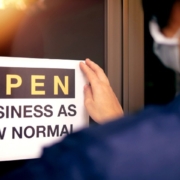
Top scientists are confirming our fears: COVID-19 will not be going away anytime soon. Unfortunately, the “post-COVID-19” work culture does not exist, and as we have heard many times before, we are officially entering a new normal. This new normal has presented business leadership with new and unfamiliar challenges, chief among them will be attracting and retaining talent in what has become a much more virtual workforce.
How can employers embrace the New Workforce, and stay competitive in attracting and maintaining their employees?
The Virtual Workplace Emerges It is rather remarkable the way that many businesses quickly adapted to keep operations running throughout the government-mandated lockdowns. Employees started working from home offices and communicated easily and efficiently using technology. Meetings were still held, customers were served, and in many cases, deals still made. Virtual became the new normal.
Eventually workers will be expected to return to the office. But will they really want to, at least to the extent that on-site attendance was essentially a given before the virus hit? After all, a large proportion of workers now appreciate the improved work-life balance of working remotely and being able to spend more time with family. They have discovered productive time that was wasted commuting to and from the office every day, and enjoy the savings realized by not spending money on daily transportation costs.
It seems everyone can find something to like about working virtually. Now that more workers have experienced the benefits, it is safe to assume that the practice will grow and workers will, to some degree, demand options for more flexible home-office schedules.
Creating a Virtual Corporate Culture Establishing a corporate culture in the post-pandemic business world is one area where leaders will forge new trails. In the virtual workplace, it will be difficult to gather every worker under one roof if the workforce is dispersed across the globe or operating in different time zones. Without the opportunity to establish the personal reinforcement that management traditionally relied on to communicate organizational goals and objectives, cultural messaging will require new ways to set a corporate identity.
First and foremost, leadership must establish an environment of trust. It is one thing to be able to set a standard when worker attitudes can be quickly assessed through personal observations and daily feedback, but still another thing when the possibility exists that management may not ever physically meet new employees but only get to know them as a face they see during videoconferences. One solution may be for employers to be more proactive in assessing employee attitudes through practices such as monthly employee satisfaction surveys or scheduled one-on-one sessions that allow workers to speak frankly about issues of concern.
Businesses must find more ways to create community in a virtual world to overcome the feeling of isolation many remote workers may experience. This could include weekly virtual happy hours, business book clubs or friendly department competitions to raise money for selected charities.
Giving Employees the Tools to Work Although working remotely is a rather novel experience for many employees, companies have been offering the option of flexible office hours and working from home for years. The COVID-19 virus has merely accelerated the practice. In 2014, an MIT Sloan School of Management’s Executive Education Department Quality of Life survey reported some astounding results in terms of remote employee job satisfaction. For instance, 90 percent of the respondents said that their family and personal life improved; 85 percent agreed that their stress was reduced; 80 percent said that morale and engagement improved; 62 percent felt more trusted and respected; and 93 percent believed that collaboration was better than before.
The extent to which increases in remote work affect the management of personnel post-pandemic is still to be determined, but there’s little doubt that there will be changes. It will be up to leadership to establish policies that provide employees more control over their schedules without sacrificing productivity.
One solution is to give employees equipment for their home offices that provides greater conformity and compatibility with equipment in the office. At the minimum, this will include a laptop computer and perhaps a monitor, but in many cases companies may also provide mobile phones and printers. This would help maintain corporate security and make tech support simpler. Another option would be to give employees an office equipment stipend that sets maximum amounts employees can spend to set up their home office, as well as a budget to cover the costs of recurring office supplies like printer ink and paper.
Providing Technology to Stay Connected Not only are employees seeing advantages to the emergence of a remote workforce, but employers are reaping the benefits as well. According to Global Workplace Analytics, employers who embraced flexible scheduling were saving over $11,000 per half-time telecommuter per year before the COVID-19 virus arrived. Cost savings include office rents, equipment, and even lower utility bills. In addition to reports of higher employee productivity and loyalty by offering flexible scheduling, businesses also benefitted by hiring from a larger pool of workers from anywhere in the world.
Businesses must be prepared to give employees the right technology to excel in a virtual workplace. This includes staying on top of the latest video-conferencing programs that help coworkers stay connected regardless of location, and providing team-messaging tools that allow for the safe sharing of important data and documents. Finally, a fine line will no doubt have to be walked in terms of project management tools to monitor work status. Employers must consider how workers might react to intrusive time management tools that may give the impression that someone is always looking over their shoulder.
There are sure to be missteps for many businesses over the months to come. However, there will also be some wonderful innovations that completely transform the way companies operate going forward. If the COVID-19 has shown us anything, it’s that the business world can meet and adapt to any challenge that arises.
About Spencer Trask & Co. Spencer Trask & Co. transforms big ideas into world changing ventures through the power of the Spencer Trask Network. The company has been instrumental in helping companies pioneer technological and scientific advancements in the fields of genomics, healthcare technology, mobile technology, AI, and Open Innovation. Scientists and entrepreneurs partner with Spencer Trask because the company provides the precise combination of experience, guidance, and foundational capital to protect and build on big ideas. Working with advisors and private investors, Spencer Trask develops those ideas into world-leading companies.
https://spencertraskco.com/wp-content/uploads/2022/10/post-covid.jpeg479720sambavincehttps://spencertraskco.com/wp-content/uploads/2025/11/SpencerTrask.pngsambavince2022-10-07 17:32:172022-10-07 17:32:17There is No Post-COVID-19 Culture
Welcome to Spencer Trask Perspectives, a monthly interview series with our CEO Bill Clifford and writer John Essick. In each installment, Mr. Clifford shares his unique insights and expert opinions on topics such as business development, deal flow, C-suite management, startup culture, entrepreneurialism, and more.
We welcome your feedback, and encourage you to submit questions to [email protected] for Mr. Clifford to answer in future articles.
The past few months have been filled with stories of small businesses struggling to survive, or even worse, shutting down completely. However, many businesses have been able to quickly adapt or pivot their operations to not just stay in business, but to thrive.
For example, restaurants have migrated from serving seated customers to offering curbside pickup or meal deliveries. Retail businesses have turned to technology to engage customers through digital outreach. Although these businesses may have had to slash jobs, they are still essentially providing the same goods or services as they were before COVID. Others, however, have completely changed their business; distilleries that once produced alcohol now make hand sanitizers, and clothing companies that once manufactured clothing items now produce masks and other PPE items.
In the short term, these businesses should be commended for both their ability to pivot and keep the doors open and workers employed, as well as their contributions to keeping people healthy. In the long term, it remains to be seen if, in fact, they have set themselves up for a fall when, and it will happen, life gets back to something resembling “normal.”
I spoke with Spencer Trask CEO, Bill Clifford for his thoughts on what factors must exist for these small businesses to successfully “re-pivot” to survive a Post-COVID-19 marketplace.
John Essick: Many businesses survived COVID-19 by pivoting quickly to meet new market demands. Do you think they will be able to re-pivot as quickly back to doing what they did before the pandemic and regain old markets?
Bill Clifford: The answer to that question depends on two factors: 1.) When this pandemic ends and the company attempts to re-pivot, will the market that they attempt to re-pivot to still exist? There is no guarantee that old markets will still exist or ‘re-emerge’ in the world of the ‘new normal’; and 2.) Will the workforce that existed in the old world still exist, allowing a rapid re-pivot? Many companies had to furlough, layoff, fire or otherwise release many of the skilled and trained workers that were part of their prior success. There is no guarantee that those same workers are still available for rehire in the new normal world.
It is doubtful that the end of the pandemic means a return to an economic climate that was an exact replica of the way things were pre-pandemic. We have likely seen a permanent change in the way we do business across many, if not most marketplaces — especially hospitality, retail, restaurants and even automobile sales and service. Companies that have survived by quickly pivoting to new or adjacent markets for survival are to be commended for their survival skills and for keeping some portion of the working population employed during these difficult times. Assuming that they pivoted into a market that was unique to the COVID-19 pandemic, and therefore not a sustainable market long term, they must now either try to return to their roots in their old marketplace or pivot once again to a new marketplace that is sustainable. As I said above, there is no guarantee that their old marketplace is sitting there waiting for their reentry — they have proven once that they can quickly pivot successfully. The end of the pandemic may force them to prove that they need to do it all over again!
JE: How can small businesses re-pivot without losing balance? In other words, what will it take for a business to confidently be able to say, “This is who we are”?
BC: The most important thing that a small business can do to survive in these periods where they may have to change their business focus to react to changes in the market caused by COVID-19, is to keep in mind their core competencies and not try to be something that they are not. If they are the world’s best shirt maker, do not suddenly attempt to become a maker of women’s dresses! Although they sound like similar skills, the competencies are far different, and you will get your clock cleaned by companies with decades of experience and loyal customer bases. Venturing into new markets outside your core competencies can spell disaster and quickly upset the delicate balance of a small company. Small companies that drew upon their core competencies and pivoted away from their primary market to a market better served during the COVID-19 pandemic should be praised for their flexibility, adaptability, and survival instincts. Their strategic challenge will come when the pandemic subsidies and they are faced with the decision to either remain in the ‘pandemic-enabled’ market or re-pivot back to their original market, if it still exists in some viable fashion.
As I have suggested, there are no guarantees that the new normal means that the markets that once existed will once again re-emerge in the new normal world. The business models that once thrived in the old normal, such as high-end, direct-to-consumer luxury sales such as Away, Boll and Branch, etc. may not find the same, receptive markets post-COVID. Consumer buying patterns shifted during the pandemic and some of those shifts will become permanent buying patterns.
Just as employees became comfortable working at home, more and more shoppers became comfortable shopping from home even for the most basic items like groceries and pharmaceuticals. The end of the pandemic does not mean the end of those newly ingrained buying habits. The online shopping phenomenon that began 20+ years ago with the advent of the internet was met with a tsunami when the pandemic hit, and there is no turning back the clock.
JE:Do you think businesses, like the distilleries that now produce hand sanitizers or clothing manufacturers making PPE, keep these operations functioning even as they return to doing what they did before COVID-19, or should they shut them down and focus on their roots?
BC: Based on what the government stockpiles looked like when we entered this pandemic, hand sanitizers and PPE manufacturers were working overnight just to get us up to a minimum level of supply. Now that we’ve reached that level, I suspect that the hand sanitizer business will remain robust well into the future as all Americans have become heightened in their awareness of the risks, not only of the COVID-19 virus, but of all airborne viruses. I believe that we have become a society that will now live with hand sanitizer as a part of our culture for many years to come! As for PPEs, I also believe that they will become standard fare, not only in hospitals but in doctors and dental offices around the country, so a steady stream of PPE is also warranted.
There is no way to predict which trends or markets will still exist after COVID-19 subsides. The best thing any business can do right now — whether it be a startup or global industry leader — is to keep on their toes, stay flexible, do their due diligence, and stay tuned into current affairs. There is no one answer for every business out there; founders and business owners need to be plugged into their own data and trends more than ever. What worked for the pizza restaurant down the road, may have put the deli next door out of business. Ask your sales team what customers have been saying, meet with the marketing team to see which campaigns have been converting the most sales, and remember to listen to your loyal customers, clients, and your own employees!
JE:Going forward, should businesses consider eschewing the concept of global supply chains and plan to source locally to avoid disruptions in supply chains?
BC: I wrote at length about the risks of global supply chains in a previous Spencer Trask Perspectives article (read: “Thanks to COVID-19, the Startup World Has Changed Forever”). For many reasons, not the least of which, is the inherent risk in the unreliability of international partners to fulfill contractual commitments and quality control issues. I would recommend that businesses begin to source US-based supply chains to avoid both disruptions in delivery and potential quality control problems in the future.
JE: Do you think companies that pivoted away from pre-COVID operations hurt themselves in the eyes of investors or will their ability to adapt be considered a positive?
BC: Companies that pivoted away from pre-COVID operations to survive and then survived, helped themselves in the eyes of investors. Their willingness to adapt and survive is a positive attribute. The trick will be to pivot to an on-going enterprise once the pandemic is over. As stated above, there is no guarantee that their original marketplace will be waiting for them once the pandemic has passed. They must reassess the market and determine if what remains of that market is sufficient to rebuild their business, or if they must retool their product line to address new or adjacent market to sustain their business.
JE:Is there one once-accepted fact about how to model or run a business that you think will no longer apply in the new normal?
BC: Old normal or new normal — I believe that the concept of the hierarchical organizational chart, with multiple levels of reporting structures and fancy titles at all levels in between — has become an anachronism! Today’s organization is more an association of rapidly assembled teams with a team leader built around skillsets with clearly defined deliverables, supplemented by outside experts, where needed. The CEO provides the vision statement and guides the direction — more in a messianic fashion — and holds teams accountable for deliverables and dates. Team members can participate on multiple teams as their skill sets require.
I also believe that mandatory attendance in an office environment will become obsolete. We all have had to make adjustments on how we interact with others due to COVID, but we have also had to learn to listen and respect the comfort level of others. Having an employee refuse to come into the office due to flu season was almost unheard of, unless they had an immune-compromising disorder. Now, we need to listen to employees and respect their decisions as a matter of health and hygiene. What works for one family, may not work for another, and so on.
JE:How do you see small businesses reimagining a workforce that will have some people who may prefer remote, and others who work better within a group environment?
BC: There are plenty of ways to satisfy both the remote employee and the person who likes the group-think environment with today’s technology. Since the pandemic, the remote employee has had to perform almost all of their tasks from their home office with little interaction, as has been their preference. The employee who needed group interaction has had to rely on Zoom or other video conferencing tools for a group meeting. Rarely were they able to gather in person for face-to-face meetings. As the pandemic eases, companies will find that some employees are much more productive working remotely and may ask/choose to remain remote employees post-COVID-19. Companies may find that their productivity is actually greater working remotely and encourage the remote working relationship. Others may welcome the day when a return to the office is encouraged and their productivity increases greatly when they are back amongst other employees.
JE:The latest U.S. Census calculates that certain high-tech regions of the country, such as Silicon Valley, have the highest housing and office space costs in the U.S. Now, with the wider acceptance of both remote workforces and digital purchasing, do you see the traditional concept of business sectors like Silicon Valley fading away, and should small businesses consider setting up shop in less expensive regions of the country to keep operating costs lower?
BC: Regardless of the high cost of office space and housing, I do not see a dramatic shift in the location of small businesses and high-tech startups away from Silicon Valley. We may see a reduction in the total amount of office space taken, but startups need to be where the action is — where the hiring is and where the Venture Capital action is — and that is in Silicon Valley, so don’t look for a major shift in the real estate market. The VCs like to drive down the street from Palo Alto to visit their clients. New hires like to drive to One Infinity Loop to interview with Apple. Techies like to stay close to home. Startups will likely want to stay close to the action in Silicon Valley for a long time to come.
About Bill Clifford Bill Clifford is Chief Executive Officer of Spencer Trask & Co., a privately owned advanced technology incubation firm. Prior to joining Spencer Trask & Co., Mr. Clifford served as Chairman of the Board and Chief Executive Officer at Aperture Technologies Inc., General Partner of The Fields Group, and General Partner of New Vista Capital. He is also the former President and Chief Executive Officer of Gartner Group, the world’s leading authority on the information technology industry, user and vendor technology strategies and market research. During his tenure at Gartner, annual revenues increased from $175 million in fiscal 1993 to $780 million in fiscal 1999.
Mr. Clifford currently serves on the board of directors of Cybersettle, Inc. He has been featured in CEO Magazine, Leaders Magazine and Forbes, and is a keynote speaker and panelist at numerous Technology Industry conferences.
https://spencertraskco.com/wp-content/uploads/2022/10/sataying-alive.jpeg488720sambavincehttps://spencertraskco.com/wp-content/uploads/2025/11/SpencerTrask.pngsambavince2022-10-07 16:42:262022-10-07 16:42:26Staying Alive Post Pandemic
Welcome to Spencer Trask Perspectives, a monthly interview series with our CEO Bill Clifford and writer John Essick. In each installment, Mr. Clifford shares his unique insights and expert opinions on topics such as business development, deal flow, C-suite management, startup culture, entrepreneurialism, and more.
We welcome your feedback, and encourage you to submit questions to [email protected] for Mr. Clifford to answer in future articles.
Since February of 2020, COVID-19 has been disrupting sectors and industries across the board. As of November 1st, 556 corporations have filed for bankruptcy, according to S&P Global Market Intelligence. We have watched Wall Street suffer, as much as Main Street. While most of the attention has focused on businesses working to recover and get back to some resemblance of ‘normal,’ often overlooked is the effect the pandemic has had on entrepreneurs and small business owners who were poised to sell their business when the pandemic struck or even had plans to sell within the next two or three years. Buyers they had hoped to attract have pulled back, and it is unclear when they may reappear or what metrics they will use to judge a company’s worth. In addition, it may be several years before entrepreneurs and small business owners see pre-COVID valuations for their companies.
I spoke with Spencer Trask & Co. CEO, Bill Clifford for his thoughts on how COVID is affecting the future of exit strategies of entrepreneurs and small business owners, and what steps they may take today to prepare for when buyers reappear.
John Essick: How many months or years do you think COVID has set most business exit strategies back for owners?
Bill Clifford: Not to hedge my answer or avoid giving you my honest opinion, John, but this is a clear case where I have to say it depends on the company and on the market segment they were participating in. For companies that were dabbling on the fringes of the healthcare industry or were component suppliers to PPE manufacturers, ventilator manufacturers, digital thermometer makers, software suppliers and telephone technology suppliers to telehealth companies, etc. saw their windows to exit compress sharply during this period, as their revenues and earnings were boosted by the overall surge in purchasing in response to the pandemic. These companies became prime targets for acquisition by larger industry players looking to roll up a given market segment to control price and supply while building brand image.
While the world was focused on COVID-19 and all its repercussions, other more mundane companies with exit aspirations found themselves in a bit of a dilemma. If they had reached the point in their exit planning where they had developed a short list of exit strategies (i.e. public offering or strategic sale) then they were likely faced with the choice of retracting their “S” level filing and having their investment bankers try to keep prospective investor warm for an offering down the road when the pandemic has passed (provided of course that the company survived the pandemic without disastrous financial implications!), or keeping their potential strategic partners warm and interested during this same period. The alternative to both scenarios is to lower the exit price (i.e. lower the per share offering price or lower the sale price to the strategic partner). In essence, conducting a fire sale in the teeth of the pandemic. This would be a strong signal to public investors and to the strategic buyer that management has little confidence in its ability to manage through the pandemic and the likelihood is that the price would literally “fall like a rock.”
JE: How can business owners alter their current exit strategy in a post-COVID-19 world? What data should they be tracking now to prepare for a sale or M&A down the road?
BC: I have seen some very creative financial presentations by companies that had been forced by the market to offer contract terms and conditions that were different from their traditional T&Cs. For example, instead of an outright purchase of their products, customers were insisting that the company lease their products over a 3,4, or 5-year period. This, of course, played havoc with their cash flow in the short term and occurred right at the time that the company became an acquisition target. To overcome this issue, the company created two sets of financial statements: one was the GAAP compliant set, and the second set reported results along the lines of the company’s historically reported revenues — that is when customers purchased, not leased, their products. This set of financial statements was referred to “as if sold” and gave everyone who reviewed the results a common benchmark against which to review the current periods against prior year results. This was most helpful in assessing the health of the company and resulted in a successful financing.
It is these kinds of creative techniques that companies need to think about today to make their sale or M&A event successful tomorrow. If they had a strong and successful track record pre-COVID-19, and the pandemic has taken them off the track but their fundamental strengths are still demonstrable in their financial results, they must do all they can do to highlight these strength, including keeping a separate, second set of financial statements which reflect these more positive results. Or, stating the financials in a way that more accurately reflects how events would have transpired, without the impact of COVID-19.
JE: What information would prospective buyers and investors look for in a post-COVID-19 world?
BC: Today’s buyer and investor are looking for the same things they always look for, plus a few extra attributes that most of the survivors of the pandemic should proudly demonstrate. To have survived the initial wave of business failures of the spring and early summer is a testament to any company’s flexibility and resilience. It is doubtful that a company of any scale could survive the pandemic without a strong leader and a strong bond between that leader and the management team. These are two key attributes that investors and strategic buyers alike look for in a company prior to making an investment of any kind. The company’s survival also speaks to the attractiveness of the product line, since the pandemic had the effect of forcing markets to focus on must-haves not nice-to-haves, so optional, discretionary and frivolous products did not survive long in that cut throat environment. All these attributes combined result in a company that would be an attractive investment/acquisition target post-COVID-19 for the right buyer.
JE: What is the general mindset and landscape of VC right now?
BC: The Venture Capital community remains hungry for opportunities for the right deals at the right prices, and investment capital is available. Some firms actually started funds focused on companies that dealt with COVID-19 related products and services in the healthcare sector. That particular sector has exploded along with telehealth and anything related to home health improvement, home gyms, etc. At home fitness apps, for example, were up by 64%, year over year, as of October 18th.[1] In that same timeframe, videoconferencing apps were up by 328%! These sectors are not expected to compress back to pre-COVID levels after the pandemic has passed — in fact they are forecasted to continue to grow steadily as we have become accustomed to working from home, exercising at home, and getting our healthcare delivered to us through telehealth media.
JE: The past 9 months have no doubt caused many business owners who had planned on selling their business over the next few years to put those plans on hold, while others who may have been on the fence have determined that it may be time to develop exit strategies. Would you suggest these owners get out as soon as possible, or would it be better to focus on and strengthen key metrics and wait until things improve, even if that means waiting for several years?
BC: As I said above, if you as the entrepreneur can present metrics and results that show your company in a positive light, despite having some difficult periods during COVID-19, then trust that your prospective buyers will understand and see that your company has performed admirably during a difficult period. If you are simply getting out “as soon as possible” before things get worse, then also trust that your prospective buyers will also see through that scenario and likely build in purchase protections, like earn out clauses, etc. so that they are not left holding the bag while you skip town with their money! If you really have a solid business that can perform and yield positive results, then your best return would result from holding on for a few more years and posting some more solid results before selling.
JE: Do you think that the disruptions and uncertainty that COVID created for so many businesses, particularly startups, will create a surge in entrepreneurs looking to sell off their companies and pursue less risk adverse futures, or is the drive to create regardless of risk just something in an entrepreneur’s makeup?
BC: The desire to start and build a company is something that flows within the veins of the entrepreneurs body, and I suspect will not be dampened by the disruptions and uncertainties of a pandemic like COVID-19, or any other phenomenon. True entrepreneurs are focused and driven — almost maniacally so — on their goals, and view events like COVID as temporary obstacles on the way to success. They may hibernate for a while waiting for the storms to pass but I doubt that you will see the true entrepreneur deflected from their true mission for long!
JE:It takes much stamina, hard work, and perseverance to make a company successful and that is even more true today with the disruptions and uncertainties many businesses face. It seems counterintuitive to be considering exit strategies at the same time. Is an exit strategy something that should be in a startup business plan from the start, or is it something to consider once the company is successful?
BC: That is an interesting question, and again, I will have to say that it depends. In this case, it depends on who is financing the company. If the initial capital is coming from the founder or the founder’s friends and family, then the path to the exit is often poorly defined and very ‘loosey goosey’ — meaning it is totally under the control of the founder who may or may not ever want to exit if they are having too much fun!
If the seed capital is coming from a more institutional source (i.e. a Venture Capital firm, a bank, etc.) then you can expect that a more formal business plan was created with financial projections, cash flow projections, a Board of Directors or Advisors, and a plan to return the invested capital with a profit. In this case, the exit plan is clearly defined and, while it might not be executed exactly as described in the business plan (it rarely is), at least everyone understands that the company exists to make money for its shareholders and investors through some kind of monetization exit.
JE: Key personnel time is a valuable resource for many small companies and getting things in order and responding to a buyer’s due diligence requirements can eat into the time that might be better spent keeping the business afloat. How does leadership determine if preparing for a sale is worth it right now? Should they consider bringing in outside consultants?
BC: I have always found that well-run companies did not really have to distract their key management team members, nor did they have to create financial reports, schedules, or analyses as part of due diligence that they had not already prepared many times before as part of their own internal management reporting systems. The information that buyers are looking for is the same kind of information that senior management would use to evaluate the performance of their own company — particularly as it relates to competitive analysis and financial benchmarks — so requests from prospective buyers would likely follow much the same kinds of thinking, namely how does the company’s products stand versus the competition and how does the company’s financials look versus industry norms.
JE: When assessing an exit strategy for a company today, do you think the numbers or metrics that made businesses attractive to suitors pre-COVID will matter, or will suitors take new equations into consideration post-COVID?
BC: What made a deal attractive pre-COVID will make it attractive post-COVID, and vice-versa. If you were an ugly duckling but survived through the COVID period, then kudos to you for your creativity and perseverance — it might be enough to earn you a second look from buyers or Venture investors. However, if your fundamentals are not any prettier than they were pre-COVID then your chances of finding a suitor are not likely to improve. The end of the pandemic does not mean that all the rules of the investment game have changed. The fundamentals remain the same — strong and predictable revenue growth, expanding margins, expanding markets, cost control, competitive advantage, etc. If you bring these to the table, either pre or post COVID, you will have an audience of suitors.
About Bill Clifford
Bill Clifford is Chief Executive Officer of Spencer Trask & Co., a privately owned advanced technology incubation firm. Prior to joining Spencer Trask & Co., Mr. Clifford served as Chairman of the Board and Chief Executive Officer at Aperture Technologies Inc., General Partner of The Fields Group, and General Partner of New Vista Capital. He is also the former President and Chief Executive Officer of Gartner Group, the world’s leading authority on the information technology industry, user and vendor technology strategies and market research. During his tenure at Gartner, annual revenues increased from $175 million in fiscal 1993 to $780 million in fiscal 1999.
Mr. Clifford currently serves on the board of directors of Cybersettle, Inc. He has been featured in CEO Magazine, Leaders Magazine and Forbes, and is a keynote speaker and panelist at numerous Technology Industry conferences.
https://spencertraskco.com/wp-content/uploads/2022/10/covid-disrupt.jpeg720720sambavincehttps://spencertraskco.com/wp-content/uploads/2025/11/SpencerTrask.pngsambavince2022-10-07 16:32:322022-10-07 16:32:32Did COVID Disrupt Your Exit Plan? Here’s How to Get Back on Track
https://spencertraskco.com/wp-content/uploads/2022/10/interos-img.jpeg480720sambavincehttps://spencertraskco.com/wp-content/uploads/2025/11/SpencerTrask.pngsambavince2022-10-07 16:14:092022-10-07 16:14:09Interos Protects Supply Chains with the Trensant AI Platform